

Trump says US and Tehran are holding ‘good talks’ as drones strike Iran’s neighbours
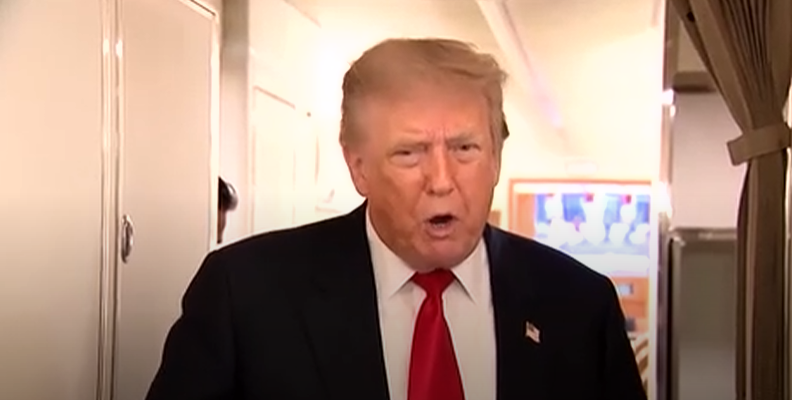
President Donald Trump said on Monday that the United States was engaged in “good talks” with Iran and that a deal to end their conflict remained possible, but warned that U.S. strikes would resume if negotiations failed.
Despite Trump’s optimism, Tehran appeared to quickly test the pause in the U.S. military campaign, with Saudi Arabia, Jordan and Iraq reporting drone attacks on Monday. Washington abruptly suspended a two-week campaign of air strikes on Iran on Saturday, in Trump’s latest strategic shift in the five-month-old conflict.
“We’re having good talks,” Trump said. “I think there’s a good chance that something could happen, and if it does, good. If it doesn’t, we go back to doing what we were doing two days ago.”
At a campaign rally in Michigan later on Monday, Trump said of Iran: “You can’t bribe them. You’ve got to beat them, and we’ll beat the hell out of them. But we’ll see how it turns out. Right now, there are very friendly negotiations going on.”
Iranian Foreign Ministry spokesman Esmail Baghaei said on Monday that messages were still being exchanged between the two sides through mediators and that Iran had not abandoned diplomacy. However, he dismissed reports that Tehran had requested negotiations as “fabricated.”
“This is not in our DNA,” he said.
A senior Iranian official told Reuters on Sunday that Iran would halt its own attacks as long as Trump’s self-imposed ceasefire remained in place.
Iran’s central military command later on Monday accused the United States of threatening vessels and oil tankers in its territorial waters and of “attempting to implement an illegal maritime blockade”, calling the move an escalation of the regional conflict.
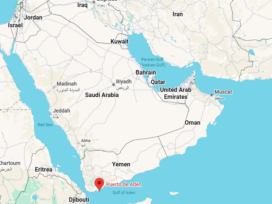
Saudi Arabia said it had shot down drones targeting petroleum facilities, including sites in Riyadh. It said the drones had been launched from Iraq by Iran-backed armed groups and reserved the right to respond.
Separately, Iran’s Houthi allies in Yemen said they had targeted the East-West Pipeline, which carries oil to Saudi Arabia’s main Red Sea port of Yanbu, in retaliation for Saudi drone incursions.
Tehran also said it remained in control of the contested Strait of Hormuz, a crucial waterway for global energy supplies that Trump has demanded remain open to shipping.
OIL PRICES TUMBLE
Public opposition to the war has weighed on Trump and his Republican Party ahead of November’s midterm elections, when they will seek to defend slim majorities in Congress.
A Reuters/Ipsos poll conducted over the weekend showed Trump’s approval rating rising three points from last month to 37%, although that was still close to the lowest level of his presidency. Just one in three Americans supported the war with Iran, the lowest Reuters/Ipsos reading since the conflict’s early days, with most respondents saying Trump had failed to clearly explain his objectives.
The end of the U.S. bombing campaign after 13 consecutive nights of intensifying strikes, combined with Trump’s comments about negotiations, sent oil prices sharply lower. U.S. crude fell 8.21% to $81.98 a barrel, while Brent crude dropped 9.31% to $87.77.
Trump’s decision to suspend U.S. attacks reflected advice from military officials that the bombing had reached the limits of what it could achieve, according to a U.S. official and several U.S. media reports.
The U.S. official told Reuters that military commanders had advised the president they were running out of targets and that General Dan Caine, chairman of the Joint Chiefs of Staff, had raised concerns about dwindling air-munitions stocks.
Trump rejected suggestions that the U.S. was facing a shortage of munitions, saying the military was rapidly rebuilding inventories depleted by shipments to Ukraine. He said he wanted more of “the more sophisticated stuff.”
IRAN MEDIA SAY SIX SHIPS TURNED BACK
Iranian state media cited an “informed source” as saying that Iran had turned back six “offending ships” on Monday that had attempted to cross the Strait of Hormuz without permission.
Trump launched his renewed bombing campaign after Iran fired on ships using a route promoted by the United States, which had advised vessels to sail close to Oman’s coast.
Iran says ships may pass only through a channel in the Strait of Hormuz that runs closer to its own coast, where it claims authority to control transit and impose fees.
The two weeks of renewed U.S. bombing killed scores of people in Iran and destroyed bridges and tunnels across the south, as well as military targets.
Four U.S. service members were killed in retaliatory attacks on U.S. bases in neighbouring states. Iran also struck civilian infrastructure in Gulf countries, describing the attacks as retaliation for U.S. strikes.
It remains unclear what leverage Washington can exert to loosen Iran’s grip on the strait.
Washington and Tehran reached an agreement in June on a framework for talks due to take place by the end of August, aimed at resolving major issues including Iran’s nuclear programme.
However, the two sides have disagreed over the meaning of the memorandum’s provisions on the strait. Washington insists the agreement requires Tehran to allow free passage, while Iran says it retains the authority to supervise transit.
Additional reporting by Muayad Hameed in Iraq. Writing by Peter Graff, Toby Chopra and David Brunnstrom; Editing by Sharon Singleton, Toby Chopra, Mark Potter and Cynthia Osterman.