

Why a Limited War with the US May Suit Iran Better Than Peace (closest to the original)
At first glance, Iran’s surprise missile strike on a US base in Jordan earlier this week appeared puzzling. The attack ended the fragile pause in direct US-Iran hostilities and prompted Washington to resume strikes inside Iran. It was an unusual move.
If Tehran’s priority had been to secure a ceasefire, the strike makes little sense. But if Iran’s leadership believes that a carefully managed confrontation offers greater strategic leverage than peace, the decision becomes easier to understand.
One explanation is that Tehran has concluded that, despite the risks, a limited war serves its interests better than an imperfect peace.
Neither side currently appears to want a full-scale conflict. Washington has shown little appetite for a wider regional war that could threaten critical energy infrastructure, draw more countries into the fighting, push up oil prices and place further strain on US military resources.
Iran, meanwhile, has reasons to avoid all-out war of its own. Its weakened air defences, vulnerable industrial base and sanctions-hit economy make replacing military losses increasingly costly and difficult.
Instead, Tehran may have concluded that it does not need outright military victory to improve its position. Sustained pressure may be enough.
A prolonged ceasefire under present conditions could leave Iran worse off. The US naval blockade of Iranian ports would remain in place, sanctions would continue to restrict its economy, and the country would remain largely excluded from international energy markets. At the same time, Saudi Arabia, the UAE, Qatar and other regional oil and gas exporters could gradually return to normal trading while Iran remained economically isolated.
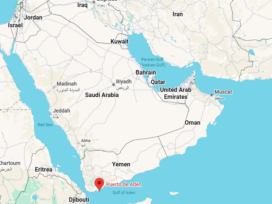
A limited conflict alters that calculation. Although Iran continues to pay a heavy military and economic price, disruption in the Strait of Hormuz and, through the Houthis, pressure around the Bab al-Mandab Strait continue to affect global shipping, insurance premiums and energy markets. Even limited disruption forces governments, shipping companies and energy importers to pay attention to Iranian interests.
In Tehran’s view, that means it still possesses leverage.
Iran also appears to be trying to reshape the diplomatic framework governing Gulf shipping. Rather than accepting unrestricted freedom of navigation, it has repeatedly suggested that commercial traffic should operate under arrangements negotiated with, or administered by, Iran. If that is indeed Tehran’s objective, it is seeking not simply to reopen the Strait of Hormuz, but to ensure that any future settlement reflects Iranian influence rather than a return to the pre-war status quo. Maintaining a limited conflict helps preserve that bargaining position.
From Tehran’s perspective, keeping the crisis alive below the threshold of full-scale war may therefore be preferable to accepting a ceasefire that leaves sanctions, the blockade and economic isolation largely unchanged.
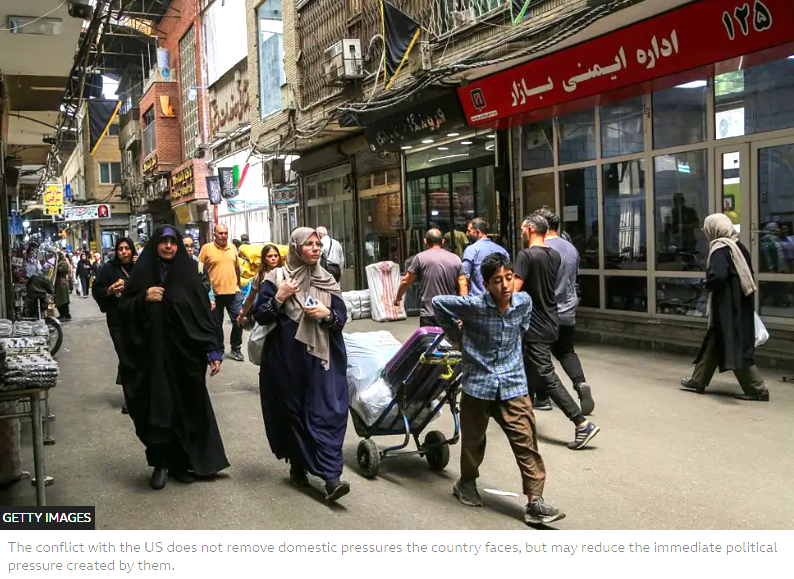
Domestic politics may also play a role. Iran continues to grapple with high inflation, unemployment, economic hardship and widespread public dissatisfaction. External conflict often enables governments to suppress dissent more easily, justify tighter security measures and rally public support around national defence. That does not solve Iran’s economic problems, but it may reduce the immediate political pressure they generate.
None of this means the strategy is without serious costs. Iran continues to absorb repeated military strikes while economic uncertainty deepens. Nor is there any guarantee that the current balance can be maintained indefinitely.
That is Tehran’s central dilemma. A controlled conflict may currently offer more leverage than an unsatisfactory peace, but controlled conflicts have a habit of escaping control. Iran may believe it can calibrate escalation carefully enough to maintain pressure on the United States, global energy markets and regional diplomacy without provoking a wider war.
That assumption carries considerable risks. Beyond the danger of a much broader conflict, a prolonged crisis with no obvious end could gradually strengthen international support for a tougher response.
There are already indications that the conflict is expanding. Saudi Arabia, which initially sought to avoid direct involvement, has carried out strikes against Iran-aligned Shia groups in Iraq and taken military action against the Houthis. If disruption to global trade and energy markets continues, other countries that have so far remained on the sidelines may become increasingly willing to support efforts to intensify pressure on Iran.
Some governments could conclude that the costs of a more forceful response are preferable to living with recurring disruption to international shipping and global energy supplies.
Whether that scenario materialises remains uncertain. Much will depend on whether Tehran can continue to calibrate its actions without triggering a response that fundamentally alters Washington’s political or military calculations. The next unexpected strike could determine whether this remains a limited conflict—or becomes something far more dangerous.